Tuesday, 12 May 2020

Your Lockdown ...

You're stuck in the house nearly all the time.
You can't get to work.
You rarely see any family members.
You can't visit any of your friends.
You can't go to the pub, church, theatres, concerts, or other social events.
You do all your shopping on the internet.
You struggle to find some of the foods and other products you need.
You can't get a haircut.
You wash your hands after picking up the post.
You're scared of going into the pharmacy.
You don't know what you'll do if you need to see a dentist.
You don't know when you'll next have a holiday.
You wonder whether foreign travel is a thing of the past.

Welcome to my world. If it's been difficult for you over the last couple of months, please spare a moment to consider how it must feel for those of us who have ME: it's been like this for me for about 20 years.

Please don't take this the wrong way. There are people who are really struggling at this time: those who are ill or self-isolating, or those who (like my Mum) are elderly or vulnerable and are having to manage without the carers, cleaners, and other people they normally rely on. I feel for them, and I'm praying for them every day. But I'm finding it difficult to sympathise with people who say they are bored just because they haven't been able to leave the house for 2 months, or who are complaining because their hair is a bit longer than usual.

Thanks to ME, all of the things listed above are true for me all the time. I haven't been able to work since 1998; I think the last time I visited a friend's house was in 2005; I've been struggling to find suitable foods since 1992; I haven't left the UK since 1998; and I can't remember when I last had a haircut (and guess what? - having long hair has had no appreciable adverse effect on my quality of life).

Your lockdown? My normal.


If this post has made you think, please spare a moment to find out more about ME or to donate to ME research. There is currently no cure for ME, and people who have it have to live like this all the time. Some are very seriously ill and may be permanently stuck in bed, but even those who are not severely effected are often very isolated, and all of us are living with the sort of daily challenges which healthy people don't usually experience.

Sunday, 12 May 2019

Millions Missing


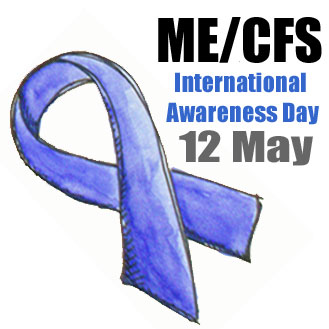
It's International ME Awareness day today. I've decided to take part in #MillionsMissing - a global campaign which has been happening on this day for several years now. In major cities around the world groups of people with ME and those supporting them gather together in public places, while those who are not well enough to be there with them send pairs of shoes with a note attached to explain why they are missing, or to describe what is missing from their lives because of having ME.

People are also asked to post a photo of a pair of shoes on social media, with a note about what these shoes represent now they are ill with ME.

Why?

Because people with a serious neurological disorder, worsened by any exertion, with a sickness impact profile which at its worst is higher than that of any illness but terminal cancer and stroke, are still being told by health professionals that we should do some exercise or receive counselling, and that will make it all go away ... .

This poster from ME Action UK sums it up:


Please take a few minutes today to find out a bit more about the reality of life with ME. Search #MillionsMissing on social media. Have a look at the ME Action Instagram page or the ME Action UK Facebook page. Read some of the stories about what people with ME are missing, about what is missing from our lives. And support proper biomedical research into ME, such as that provided by ME Research UK.


If you can't read the label on my shoes, it says

I'm missing ...
* going to church and dancing in the aisles
* going to the theatre - or performing in plays
* getting on a plane or boat to another country
* getting on a bus or bike to the nearest town
* having visitors, visiting friends, conversation
* having a clear brain to write letters or emails
* eating all my favourite foods
* mornings
* being able to study, work, or volunteer
* being able to access adequate medical care

Saturday, 12 May 2018

How Well Are You?


It's ME Awareness day today, but once again I haven't felt well enough this week to think about a blog post for it. So instead I'll post an ME function ability scale, which allows people with ME to determine how well they are. There are several versions, but I like this type best because some of the others are the other way round, with 0% being well and 100% being totally incapacitated, allowing people to tell how ill they are. I think this one is more positive.

How well am I? Well, like most people I don't fit exactly into the boxes, but overall I'd say that most of the time I'm about 60% well. I have minimal pain levels and my mobility is unusually good for someone with ME, so that's more along the lines of 80%, but my cognitive function is poor, nearer 30%. My noise sensitivity and chemical sensitivities are also severe - I hear sounds/smell scents as 20x louder/stronger than they are, so being bombarded by noise or overwhelmed by chemicals results in my health levels dropping rapidly. This month, for instance, our neighbours have been dismantling their old patio and replacing it with a new one, and the noise and stress meant that for a few days my overall health level dropped to 20% (thankfully it's almost back to normal now).

If you have ME, how well are you? If you don't, perhaps you could read this and pass it on to raise awareness of the illness - a lot of people don't realise how much ME effects the lives of those who have it, and this function ability scale might open their eyes to the reality of it.


100% FULLY RECOVERED
No symptoms, even following physical or mental activity. Able to work or study full time without difficulty and enjoy a social life.

95% VIRTUALLY RECOVERED
No symptoms at rest. Mild symptoms following physical or mental activity, tire rather easily but fully recovered next day. Able to work or study full time without difficulty, but social life is slightly restricted.

90% MILDLY AFFECTED
No symptoms at rest. Mild symptoms following physical or mental activity. Work or study full time with some difficulty but social life rather restricted. Tire easily with gradual recovery over 2-3 days.

80% MILDY AFFECTED
Mild symptoms at rest, worsened to moderate by physical or mental activity. Full time work or study is difficult, especially if it is a crowded, noisy or busy environment. Home tuition or part-time study is possible. Social life very limited due to using all energy working or studying.

70% MODERATELY AFFECTED
Mild symptoms at rest, worsened to severe by physical or mental activity. Daily activity limited. Part time work or study may be possible for a few hours a day with careful pacing of activities and rest periods, but it will be very tiring, and restrict social life.

60% MODERATELY AFFECTED
Mild to moderate symptoms at rest. Increasing symptoms following physical or mental activity. Daily activity very limited. Work or study outside the home is difficult unless additional support is available, eg quiet room for rest breaks, use of disability equipment. Short (1-2 hours) daily home study/work may be possible on good days. Quiet, non‐active social life.

50% MODERATE TO SEVERELY AFFECTED
Moderate symptoms at rest. Increasing symptoms following physical or mental activity. Rest times needed. Simple, short (1 hr) home study/activity possible when alternated with quiet, non-active social life. Concentration is limited. Not confined to the house, but unable to walk much more than 100-200m without support. May manage a trip to the shops in wheelchair.

40% MODERATE TO SEVERELY AFFECTED
Moderate to severe symptoms following any activity. Care must be taken not to overdo anything at this stage. Not confined to the house but unable to walk much more than 50-100m, usually requiring aids such as walking stick/crutches. May manage a wheelchair trip to the shops on a quiet day. Several regular rest periods during the day are needed. Only one ‘large’ activity possible in a day, eg showering, friend popping round, doctor's visit, or short (half hour) home study. Activities usually require rest day/s between them.

30% SEVERELY AFFECTED
Moderate to severe symptoms at rest. Severe symptoms following any physical or mental activity. Usually confined to the house but able to get downstairs and may occasionally go out for quiet wheelchair ride. Most of the day spent resting. Small activities possible, eg can watch TV/listen to music for short periods, but mental concentration poor.

20% SEVERELY AFFECTED
Fairly severe symptoms at rest. Weakness in hands, arms or legs may be restricting movement. Unable to leave the house except very rarely. Confined to bed/settee most of the day but able to sit in a chair for a few short periods. Concentration poor, but some small activities possible, eg can read for about 5-10 minutes at a time.

10% VERY SEVERELY AFFECTED
Severe symptoms following any activity. Weakness and pain in arms and legs. In bed most of the time but able to get to the bathroom with help. No travel outside the house. Concentration very difficult indeed. Only one very small task possible per day for only 5-10 minutes.

5% VERY SEVERELY AFFECTED
Severe symptoms almost continuously, but may be possible to be propped up in bed for very short periods. Weakness and pain in arms or legs can give rise to paralysis, dizziness, and nausea. Small amount of personal care may be possible with help. No TV is possible but a little quiet music or audio book may be listened to for a few minutes, or a friend may be seen for a minute for a quiet word. Any stimulus worsens all the symptoms.

0% VERY SEVERELY AFFECTED
Severe symptoms on a continuous basis. In bed constantly, feeling extremely ill even with permanent rest. Severe pain throughout body, and skin may be very sensitive to touch. Unable to tolerate light, noise or movement - curtains are closed and earplugs are needed. Severe dizziness may be experienced. Unable to sit up in bed and unable to care for self. Nausea and severe fatigue make eating extremely difficult. Liquid based food preferred, and occasionally nasal feeding tubes are required when the energy to chew is completely spent. Any stimulus worsens all the symptoms. Any visitor to the room is almost impossible. Talking, even to carer/family, is often impossible. Severe adrenaline rushes felt with heightened sensitivity. Sleep pattern often completely reversed.


This scale is an amalgamation of the ones found here and here. If you want to look at some others, there is an upside-down one here and a more detailed one here.

Monday, 25 December 2017

Christmas Wishes


Best wishes for Christmas to anyone reading this: I'm sorry I don't feel able to do my usual round of visiting other blogs and wishing people a happy Christmas this year.

I haven't blogged much in 2017 because we had a difficult and upsetting year, eventually losing my Dad in September to a combination of dementia and hospital incompetence. Dad loved this time of year - he loved putting up decorations, listening to Christmas music, pulling crackers, wearing silly hats, and eating lots of cake and pudding. He was also somebody who embodied the spirit of Christmas, generous to a fault and always willing to put himself out for others, a real old-fashioned gentleman. I'm trying to celebrate Christmas thinking of him and of the good times.

Thursday, 23 November 2017

Diabetes And A Plate

I took this photo for someone on a diabetes forum who is trying to break the stereotypes surrounding diabetes, particularly in response to references to "diabetes on a plate". I couldn't get it all onto a plate, but this is all my diabetes equipment, medical information, and paraphernalia. I don't normally have quite so many sharps bins and old insulin cartridges: they are waiting for me to take them to my surgery for disposal!


Yes, the grape juice, glucose, and sugary mint gels are part of my diabetes treatment - my main problem is having frequent bouts of low blood sugar, or hypos, which need to be treated immediately with something sugary. They are a medical emergency: if they are not treated immediately I could have a fit, go into a hypoglycaemic coma, or die. I even have injectable glucose, just in case I'm too ill to be capable of swallowing.

In fact, if someone whom you know is an insulin-using diabetic becomes ill while you are with them and you can't tell whether their blood sugar is too low or too high, it is safer to give them sugar than to give them insulin. If their blood sugar is too low they could die in a matter of minutes (especially if you lower it further by giving them insulin): if their blood sugar is too high a little extra sugar is unlikely to make things that much worse (so long as it is diagnosed and treated with insulin soon after). Obviously in an ideal world they should be testing their blood sugar so they can be given the appropriate treatment, but if in doubt, always give sugar rather than insulin. Chocolate is not suitable, but a spoonful or two of sugar or honey, or half a glass of fruit juice, coke, or lucozade (so long as not the diet versions), or a couple of Dextrose tablets or jelly babies would be fine.

Information about diabetes on the internet can be alarmist or offensive, and is often just downright wrong. For accurate information and advice about all types of diabetes, head to the Diabetes UK site.

Saturday, 13 May 2017

Forgetfulness And Living With Chronic Illness


Yesterday? I totally forgot it was ME Awareness day.
Today? I can't think clearly enough to write a blog post about it.

This is the sort of thing which happens when you have severe cognitive dysfunction, one of the symptoms of ME.

Instead, here are some links to some posts on other people's blogs, explaining what it means to live with a chronic illness (not always ME, but a lot of chronic illnesses share similar symptoms) - please have a look at one or more of them:

When I Say Can't

But I thought you said you were getting better?

What do spoons, beans, gorillas, credit cards, and envelopes have in common?

The Spoon Theory

ME Outside In (Drawing)

What ME is Really Like

A Glimpse Into Severe ME/CFS

Thursday, 22 December 2016

Gardens And Cake Part Two: A Nice Surprise


I had intended to post this follow-up to my previous post several months ago, but I've been so busy concentrating on my my 50 Things To Do While I'm 50 blog that I haven't had time to sort out the photos until now.


After our disappointing trip to Ryton we carried on driving back towards the Cotswolds, while I hastily looked up the closing times of other gardens we might pass en route. We decided to stop at Hidcote - we hadn't planned to do this as it was towards the end of our long journey rather than in the middle of it, but as we hadn't managed to get tea and cake at Ryton we were fairly desperate to find somewhere we could stop and have a drink.


We arrived shortly before 5pm, knowing that they closed at 6 and that the last admission was an hour before closing. We also guessed the cafes would close before the gardens, so we weren't too hopeful about whether either of them would be open or would have any cake left. But we had a flask in the car and thought that if the worst came to the worst we could always have our own tea in the car park.


The smaller cafe, which is beside the exit from the garden sales area, looked nice but was a bit noisy as all the people leaving were passing it on their way out. We asked what time they closed, and explained that the other cafe might be more suitable for me because of my noise sensitivity, but that we might come back. The staff were friendly and understanding.


We went on to the garden entrance, and explained again to the staff member on duty there that I am disabled and we were trying to decide which of the two cafes would be more suitable for me. By this point I was exhausted and struggling to walk. We didn't ask for help, but she very kindly offered to go along with us and unlock the back gate so we could go straight through to the other cafe without having to walk round too many of the gardens to get there.


The second, bigger cafe was quieter as most visitors had left the gardens by that point, and it had a wider variety of cakes as well, so we bought our tea and cake there. Every time I eat out we have to explain to the cafe staff that I have multiple allergies and need to know all the ingredients of the cakes; also that as one of my allergies is to chlorine I can't drink tap water, so have to buy a teabag and use my own water to make tea. Reaction varies, but at Hidcote this was no problem.


Both our cakes were excellent, and we would thoroughly recommend them. After a rest in the cafe I felt recovered enough to have a short walk through the nearest gardens.


We liked them so much we went back a few days later for a proper walk round the rest of the gardens (when I took most of these photos), and some more tea and cake.


The gardens were stunning - as you'd expect of a big tourist attraction at the height of the season - but what really made it special for us was the attitude of the people working there. The difference between our visit to Ryton and our visit to Hidcote could not have been more marked, not just because the gardens at Hidcote had been better cared for and were filled to the brim with a wide range of healthy, colourful plants, but also because the staff at Hidcote went out of their way to be helpful.


We will be visiting Hidcote again.

Tuesday, 16 August 2016

Gardens And Cake Part One: A Big Disappointment


I haven't posted here much lately (if you're reading this and you haven't realised, I'm now blogging occasionally about my new garden here and more frequently about my 50th year celebrations here instead), but I wanted to update a post I made three years ago about six of the best gardens to get cake. My first choice then was Ryton organic gardens near Coventry.

We hadn't visited for a while, so a couple of weeks ago, when we were passing en route back to the Cotswolds from Yorkshire, we stopped with the intention of stretching our legs with a walk round the gardens and then having tea and cake.

The first thing which struck us was that the lovely big shop, which used to sell all manner of organic and general gardening products, had gone. There was a small welcome desk, a small stand with cards and one or two other bits and pieces for sale, and a huge empty space. We found this very sad.


Our second thought was that the gardens themselves had seen better days - several areas were in the process of being revamped, some looked as though Garden Organic was in need of volunteers to do the weeding, and in others there was just a lot of bare earth. It wasn't a weekday out of season, when we might have expected changes to be underway; it was a Sunday afternoon in mid-July, so this was all a bit disappointing.

I don't want to give the impression that Ryton is no longer worth a visit. Many of the gardens are still interesting, ...


educational, ...


and attractive.


But don't go there expecting cake. The lovely little cafe which was adjacent to the big shop, and which served the best organic cakes in the country, has closed along with the shop. Instead there is a large licensed restaurant which can be accessed from the car park as well as from the garden. We went in hoping that in the middle of a Sunday afternoon there would be a wide choice of tea and cake available, and a peaceful atmosphere in which to consume it.


There wasn't. The first thing which hit us here was the noise: it was more like a packed and rowdy pub than a cosy tea-room. Even with my ear defenders on it was distressing for me; R, without noise sensitivity and without ear defenders, found it deafening, and was unable to hear me speak. The second thing which struck us was the almost total lack of cake. There was one cake stand, which contained two limp sausage rolls and a couple of iced buns, of the type you might find in any supermarket. The woman serving behind the counter seemed surprised that we had expected anything else, and really not that interested in helping us. We went outside to confer, as we couldn't hear ourselves think inside, and decided to go on and get our tea elsewhere.

We were deeply disappointed, not just because we'd hoped for cake for ourselves that day, but because we've supported Garden Organic for many years and we believe in organic principles. This means growing organically for the sake of wildlife and the environment, but it also means growing delicious food which will improve human health and well-being. And having a restaurant which instead of living up to Garden Organic's former high standards, is more akin to a motorway service station, is not a good advert for them or for organic growing generally.

We won't be visiting again, unless we hear that things have changed again for the better. We really hope they do.


I decided to split this post in two as the other part is about a different garden: this will follow as soon as I have time to write it!

Tuesday, 10 May 2016

The Meaning Of Dysautonomia


People sometimes wonder why ME sufferers can have such different symptoms from each other, or why the illness can fluctuate so much, so that one day someone with ME can seem quite well, but another day they can be unable to move. Sometimes people who don't know much about ME think this must mean that ME is all in the imagination, or that those diagnosed as having ME actually have a range of other illnesses and that there is no such thing as ME.

The truth is that ME is a physical illness which causes something called dysautonomia. The brain of someone with ME doesn't communicate with their body properly and as a result any or all of the things the body is supposed to do automatically - the autonomic nervous system (ANS) - can malfunction. The ANS includes the immune system, digestion, circulation, hormones, and respiratory system, among other things. Dysautonomia means, basically, that the ANS does not work properly, that any system of the body - all the things a healthy person takes for granted because they never have to think about them - can go wrong at any time.

This is one reason why ME causes such a wide range of symptoms, why different people with ME have different symptoms from each other, and why one person with ME may have different symptoms from day to day.

You may meet a person with ME who is able to walk, converse, and even hold down a job, because (in addition to the PENE and cognitive dysfunction which characterise all cases of ME) they have only mild symptoms of dysautonomia, such as headaches, sore throats, and a few food intolerances. Please do not assume that these people do not really have ME because they are not ill enough, or that because they don't seem very ill it must mean ME is only a minor illness.

Alternately, you may hear of a person with ME whose dysautonomia means that they cannot sit up in bed, cannot speak, cannot chew or swallow food, and have serious cardiovascular and breathing problems. Please do not assume - just because not everyone with ME is effected in this way - that these symptoms are not real, or that these people have something "more serious" and not ME at all.

A couple of years ago I saw an ANS specialist and had tests which proved that my ME is a physical illness with physical symptoms. The results showed that for me, dysautonomia currently means that the signals from my brain to my senses are 20x too loud (which is why I can't cope with noise or with chemical smells); that when I lie down my blood pressure drops too low so I struggle to sit up again; that my breathing is too shallow; and that my immune system is so over-active it has started to attack itself (which is why I have type 1 diabetes and am at risk of other auto-immune diseases). I say this is what dysautonomia currently means for me, because in a few weeks' or months' or years' time, my ANS may be malfunctioning in completely different ways.

And for someone else with ME, dysautonomia may mean something else entirely.

Monday, 21 December 2015

The Holly Bears A Berry ...


I'm hoping that, time and brain fog allowing, I'll be able to resume blogging (mostly on my garden blog, but sometimes here too) in the new year ...

Wednesday, 11 November 2015

The Big Card Sale

I'm copying this across, with some slight alterations, from my A Garden Full Of Dodos blog, because I know there are some people following The Clockwork Dodo who don't follow there, so apologies if you see it twice.

I haven't managed to blog for the last couple of months, due to a combination of brain fog, general poor health which meant I wasn't able to garden much so had little to blog about, intermittent internet, and the need to do other things on those occasions when my brain and computer were both functional - such as organising a much-needed week's holiday on Exmoor. I'll try to post something about that here at a later date.


A selection of birthday and blank cards.

On the plus side, I have had plenty of time for my other hobby of card-making, which doesn't use up much energy and only requires a working brain at the design stage. This has been very useful, as I hadn't had much time to make cards since moving to the Cotswolds - in case you haven't read the side-bar of this blog, I sell cards to friends to raise money for ME research.


A selection of birthday and blank cards for children.

I now have a lot of new card materials and a lot of new design ideas - the only problem is that I haven't really got enough storage boxes to fit a lot of new cards! So I have decided to have a big sale to sell off some of my old stock in order to make room for the new ones.


A selection of Christmas cards.

I'm selling cards in packs of 7 birthday or blank cards, or 8 Christmas or other occasion cards. Cards will be selected at random from stock available, but as long as stock levels allow, I can take one or two requests for particular cards to be included (or not included) in a pack. Packs will cost £10, with £5 from each pack going to Invest in ME: the other £5 will cover my costs. UK P&P is free for packs (and for any other cards ordered at the same time). I'm sorry I can't send cards outside the UK, as the postage costs would be too high.


A selection of cards for other occasions.

To see the rest of the cards which might be included in the packs (the ones in the photos above are just a selection, as the captions say), and find out how to order, please visit my Cards4ME blog and scroll down to the two Big Sale posts.

Hopefully I will be back to blogging about my new garden again soon - you can find posts about this on A Garden Full Of Dodos, which is now my main gardening blog.

Saturday, 9 May 2015

You Know You Have ME When ...


I started a thread on a forum 1 for people with ME, entitled "You know you have ME when ....". You may be able to imagine the sort of thing I was expecting:

You know you have ME when ...

... you have more pairs of slippers in your wardrobe than you have pairs of shoes.

... the receptionist at the doctors' surgery greets you by your first name.

... you say "shop till you drop" and you mean it literally.

Very soon, though, I noticed that nearly all of the posts were to do, not with the many physical aspects of ME, but with what is known as "brain fog".

You know you have ME when ...

... you convincingly persuade everyone to look for the red file in the hall cupboard when you really mean the blue box in the shed.

... you post your mail to yourself instead of to the recipient.

... you put your dirty clothes in the bin and your rubbish in the laundry basket.

... you get your sentences mixed up and ask someone to turn the light on because you're thirsty.

... you keep dialing the wrong number and when you finally get it right and the person answers you have to hang up because you can't remember why you are ringing them.

Sound familiar? Of course, this is the sort of thing which happens as you get older, isn't it? How about these?

You know you have ME when ...

... someone asks you do you want tea or coffee and you can't figure it out (even though you hate coffee).

... you try to use the TV remote to reduce the volume of traffic noise coming from the open window.

... you take your porridge out of the microwave to stir it, but put it back in the cupboard, and it takes you 2 days to work out what's happened to it.

... you wake up and look at the clock, and you have no idea whether it's am or pm.

... you go to make toast and coffee, put a spoonful of spread in your coffee cup instead of on your toast, and then can't work out what to do with your hands to make it right.

... you try to open the front door by pointing the car key at it and pressing the open button.

Still think this is normal? How about these?

You know you have ME when ...

... you go into your third hospital appointment of the day and the phlebotomist asks your name - and you can't remember what it is.

... you try to say something and no words come out.

... it takes you over a year to write a blog post about ME awareness. 2

... you dress up for visitors and don't notice until well after your visitors have left that your dress is on inside out.

... you spend five minutes trying to work out which is your left hand and which is your right one - and then realise later that you got it wrong!

... your partner walks towards you in the supermarket and you think "who is that and why do they look familiar?"


Brain fog is one of the most difficult things for people without ME to understand. Often R, who has lived with me - and my ME - for over 20 years, sees me making a huge effort to do something physical, and says "I could do that for you, just tell me what you need me to do". He still hasn't quite taken in the fact that, hard as it may be for me to (for instance) move a heavy bag of compost, or prune off a branch above my head, it's a hundred times harder for me to describe what I want done, when my brain just isn't functioning properly and the words refuse to come.

When I try to tell other people about brain fog they usually say something along the lines of "oh, I forget words - we all do that as we get older". This shows they really haven't understood at all. Brain fog's not forgetfulness, any more than post-exertional neuro-immune exhaustion is tiredness. Think about it like this:

Stroke causes word displacement; motor neurone disease causes slurred speech; dyslexia causes all the words on a page to swim together and become unreadable; alzheimers causes memory loss, to the extent that friends and family are no longer recognisable. The brain fog which comes with ME can cause all of these and more.

The thing that confuses people is that with ME the symptoms come and go, so that some days a person with ME will seem perfectly coherent, able to write or to converse intelligibly. This is deceptive: it gives the impression that there is nothing wrong, or that they are just a bit forgetful, when in fact they have a serious disability. The effects can be funny sometimes, of course, but they can also have devastating consequences. Imagine, for instance, going into hospital for urgent treatment and being unable to communicate with the consultant because you can't speak coherently - or can't get any words out at all.

Brain fog is a disability issue. While it's not exclusive to ME, it is not an experience most people share, and it should never be treated as such. Would you say to someone with MND or Alzheimers "oh, I get that too"? No, of course you wouldn't - so please, don't say it to someone with ME. Say "bad day?" or "would it help if you wrote it down?" or "shall I come back later?". Laugh if they are laughing. But remember, brain fog is part of their illness, and for many people with ME it's a major symptom which can effect everything they do, from the smallest household tasks, to their relationships with family and friends, to their ability to access appropriate medical care. 3


1 Thanks to the other members of Christians With ME for allowing me to share some of their posts here.

2 This was going to be my ME Awareness post for 2014, but I'm still dealing with the aftermath of having moved house last year. Physically my health hasn't been too bad, although there's a very long to-do list we're gradually working through. My brain, however, has really struggled to recover from all the paperwork and emails which were necessary for the move. I still have about 1400 unread emails in my inbox and about 1000 unread blog posts in my akregator, unless I write something down the instant I think of it I have forgotten it within seconds, I'm having trouble understanding any TV or books I haven't seen/read before, and I've more than once given my new GP completely inaccurate information because she asked a question I wasn't expecting and I had not only forgotten the answer, I was unaware that there was an answer I'd forgotten.

3 Anyone reading this who has ME and has severe brain fog might find some of these communication cards helpful - I especially love this one.

Wednesday, 6 May 2015

Nailing My Colours To The Mast

Well, actually I'm not quite doing that, because I'm not saying for which party I used my (postal) vote, nor am I asking you to vote for a particular party, or trying to start any political debates. I just wanted to share this with you:


Sooner or later, everyone has to face some sort of illness - if not their own, then that of a family member or a close friend. If it hasn't happened to you yet, then don't think it never will. When it happens, unless you are fabulously wealthy and can afford to pay for entirely private medical care, you will need the NHS.

Without the NHS, my mother would most probably have died of cancer - this year marks five years since her operation, and she's just been told that she no longer needs to go back to hospital for annual check-ups.

Without the NHS I would most definitely not have survived diabetes ketoacidosis - this year it's four years since I was admitted to A and E and diagnosed with type 1 diabetes. Without the NHS I would not have access to the insulin and needles I now need to survive from day to day. The privatisation of the NHS could quite literally be my death sentence.

So, while I'm not asking you to vote for a particular party, I am asking you to think very carefully about the NHS before you vote. Do you agree with the Conservatives that it should be taken apart and the various pieces sold to the highest bidder, or do you want more funding to be put into it so that it can keep saving lives? Do you want it to be run by companies like Group 4 and ATOS, or do you want it to be run by doctors and nurses? Do you want the cheapest treatment available, or do you want the best treatment available?

Please, use your vote to ensure the NHS is not destroyed, for the sake of everyone you know who is ill now or who will be ill, and ultimately for your own sake too, because one day it could be you.

Thursday, 12 March 2015

Bluebells Bazaar

I've received a couple of emails from Green Island Gardens in Colchester, about the Bluebells Bazaar they are holding over the weekend of May 16-17, in aid of the National Gardens Scheme. Apparently there will be stalls selling local arts and crafts, entertainment for the family, and refreshments (as well as bluebells in the garden!). There are details on their website here, and you can buy tickets in advance.

Colchester is a bit far for us to go now that we have moved to the Cotswolds, and in any case I can't go to events aimed at families as they are too noisy for me. But if you are, or can be, in the area that weekend, the NGS is a good cause, and I do thoroughly recommend the garden. You can read my post about it here.

Tuesday, 23 December 2014

Spot The Robin!


This photo was taken during the last snow we had in our old garden in Cambridge, in January 2013.

Happy Christmas!

If you're still reading this blog, why not go over to my new blog about my new garden, A Garden Full Of Dodos? I'm mainly posting on there now ...

Sunday, 12 October 2014

Moving My Garden ... And My Blog

How to move a garden ...

1) Move all the plants you want to keep into pots.


2) Hire a van and line it with sheets of cardboard and paper sacks to keep it clean..


3) See how many plants you can fit in the van (starting with the biggest and most important). Look at the plants still waiting on the pavement, and decide which ones are duplicates which you can bear to leave behind. Move the ones in the van round a bit. Pile some of the smaller ones on top of the bigger ones. Squeeze the rest in and balance some bird feeders on the top.


4) Collapse. The next day, drive to new garden and unload the van at top speed while an estate agent waits in his car, because you don't actually own the property yet so he has to unlock the gate for you.

Thankfully the house we bought was empty and our vendors agreed to let us move our plants to its garden a few days before our completion date, as the alternative would have been moving them all from Cambridge to my parents' house in Kent and then from Kent to the Cotswolds, and our move was already complicated enough!

If you are sharp-eyed you may have noticed that the photos in this post are actually in reverse, as by the time we had finished loading the van it was too dark to take photos, so I took them when were in the middle of unloading (and therefore in a tearing hurry - sorry this is reflected in the quality of the photos).

How to move a blog ...

I decided that, as The Clockwork Dodo is mainly about our Cambridge garden, I should start a new blog to write about our new garden. I wanted another dodo-based name, so as the new garden is about four times the size of the old one and there is plenty of room for visiting dodos, I have called it A Garden Full Of Dodos.

Although I'd hoped to get the new blog online a little earlier in the year, I am quite pleased I have managed in the end to do it today, as 12 October is the anniversary of The Clockwork Dodo! I'm going to keep some things the same on both blogs, but others will be a little different, as I wanted a bit of a change. I will also be updating some things (eg my pages, which have some out-of-date information on them) over the coming months.

I'll keep The Clockwork Dodo for occasional posts about other things, so please don't delete it from your blog-roll or bookmarks. This post will appear on both blogs as it is an introduction to the new one, but from now on if you want to find out about my new garden, please head over to A Garden Full Of Dodos. I'll try to post there a bit more regularly!

Tuesday, 25 February 2014

Favourite Books: My Top 20

I have finally managed to finish my list - it's taken several days as I have so many other things to do at the moment. So, here it is - I'm tempted to say "in no particular order", but actually it's more or less in the order in which I read the books ...

A Little Princess - Frances Hodgson Burnett
This was my favourite book when I was 5 or 6 (when I exhausted my parents with endless games of pretending to be "Princess" Sara) and I still re-read it today. Unlike many modern princess stories, it has a real plot, and encourages children to use their imaginations. It's not a book about p*nk tutus and fairy wands; it's a book about retaining ones spirit in the face of cruel and unjust authorities, about the triumph of good over evil. It's also a lot better than the film, which over-sentimentalised it and changed the ending.

Watership Down - Richard Adams
I was given this for Christmas when I was 7 and it immediately became my new favourite book. Again, it quickly incorporated itself into my childhood games - all my dolls were rabbits! I read it so many times that I wore out three copies and am now on my fourth.

The Phantom Tollbooth - Norton Juster
Another childhood Christmas present which I couldn't put down. Full of clever conceits and wordplay, it still makes me laugh and it's one of the first books I'd turn to if I were stuck in bed or needed something to cheer me up.

The Tombs Of Atuan - Ursula Le Guin
I loved Le Guin's Earthsea Trilogy as a child, and the second story in particular really spoke to me, perhaps because there's such a strong female character in it. It fostered my lifelong love of science fiction and fantasy, of reading about other worlds where magic is real and anything can happen, and it made me feel involved in a way no other book had done until then.

These Old Shades - Georgette Heyer
It's too easy to dismiss Heyer's books as sub-Austen or worse still, as chick-lit. They are neither. She might not be a writer of the same calibre as Austen, but then few authors are. She is a wonderful story-teller, and her books are as full of adventure and of well-researched historical details as they are of romance. I first discovered them at the age of about 10 or 11, my Mum and Dad both love them, and These Old Shades is one of R's favourite books as well as one of mine.

My Family And Other Animals - Gerald Durrell
I don't think this was the first of Durrell's autobiographical stories I'd read when I was given it at school at the age of 11, and I'm not entirely sure whether it's really my favourite, but it's difficult to pick one among so many. His books are packed with amusing anecdotes and enjoyable to read, and this one about his childhood in Corfu in particular is a lot of fun. However, it's the serious issues he raises, about our destruction of various ecosystems - and thus of the species which rely on them - and of hunting animals to the point of extinction, which really spoke to me when I read his books. I've been a supporter of several conservation projects, including the zoo Durrell founded, (not to display animals in an unnatural environment, but to protect and study them so they can be saved from extinction), ever since.

Lord Of The Rings - JRR Tolkein
I first read this when I was about 12 and I didn't notice either the minimal number of female characters or the lengthy descriptions for which Tolkein is often criticised. I just enjoyed the story! And I still do. I think the books are much better than the films, which spend far too much time focusing on the battle scenes at the expense of many important characters and plot developments.

The Chrysalids - John Wyndham
This was another book I was given to read at school and it really captured my imagination. The appeal was partly the post-apocalyptic future setting, which continued to foster my love of SF, but also partly because - as someone who was bullied at school - I identified strongly with the main characters, who are persecuted because they are different from everyone else. It was one of the first books I read which didn't have a conventional happy ending, and I still find the moral ambiguity thought-provoking.

The Daughter Of Time - Josephine Tey
I'm tempted to just write "Richard III is innocent!" and leave it at that. I can't remember when I first read this book, probably when I was in my teens, but it made a really big impression on me. I don't think I had realised before that much of what we view as history is a subjective interpretation of events rather than objective truth. It's only looking back at it now that I realise how important this has been to me: I have a passion for justice and also for finding out the truth, which is what good academic research is all about.

Gaudy Night - Dorothy L Sayers
The third of Sayers' Harriet Vane stories (if you haven't read them, start with Strong Poison), I love this primarily because it's such a wonderful portrait of university life, but it's also a clever detective novel, a beautifully understated love story, and an examination of the way in which women of the period were too often forced to choose between a career and a family.

Emma - Jane Austen
I know the default novel to pick is Pride And Prejudice, and yes, I like that too, but Emma is my favourite Austen heroine. The OED's "which Jane Austen character are you?" quiz tells me I'm Elizabeth Bennet, and that's lovely, because everyone wants to be Lizzie, don't they? - but in real life I have to confess that I'm a control freak and I can't help identifying with Emma.

The Church Mouse - Graham Oakley
I was too old to read Graham Oakley's Church Mice books as a child, so I didn't discover them until I was a student, browsing bookshops, and then I really fell for both the stories and the clever illustrations. I still collect them, and I often re-read them too. If you know a child of about 5 who has outgrown basic picture books but isn't quite ready for story-books, then get hold of a copy of The Church Mouse for them - but do make sure you get an original 1970s copy and not one of the 2009 reprints, which squashed the wonderfully detailed drawings into half the original size.

Dirk Gently's Holistic Detective Agency - Douglas Adams
Controversially, I prefer this to the Hitch-Hiker books. I love the literary jokes and the Cambridge references, but even if you know nothing about Coleridge, it also has an electric monk, an impossibly stuck sofa, a time-machine, and an anti-hero detective who believes in the fundamental interconnectedness of all things. What's not to like?!

No Bed For Bacon - Caryl Brahms and SJ Simon
This is the book which Tom Stoppard apparently didn't (deliberately) plagiarise for the plot of Shakespeare In Love. I still think the estates of Brahms and Simon should be getting royalties from the film-makers though! Read it and see if you agree.

Angels And Men - Catherine Fox
I love this book, because it's funny, sexy, and intelligent, because Fox writes about issues of faith without feeling a need to hit you over the head with her own beliefs, and because it makes me feel nostalgic as it reminds me (just a little bit) of my own student days.

Harry Potter And The Philosopher's Stone - JK Rowling
I like all the Harry Potter stories, but the first one stands out for me, because Rowling's magical world is all so new, to the reader as well as to Harry. Well-written and funny, it's a great page-turner of a story in its own right as well as being full of clever details which will become significant in the later stories.

The Book Of Job
Before I got ME I'd probably have said my favourite book of the Bible was the Psalms, but in the last few years I've realised how much I appreciate Job. I like it because Job keeps questioning and refuses to give in, because it compares our own experiences with the workings of the universe and puts them into perspective, and because it doesn't give any glib answers. Anyone who's ever been seriously ill will know that at some point, some well meaning person will come alongside you and tell you that the illness is your own fault, that you brought it on yourself, and that if only you do this, that, or the other, you will get well again. I don't think it's a spoiler to say that the book of Job explodes this point of view - his "friends" are proved wrong and he is vindicated! And finally, I like the fact that, even though this is, chronologically speaking, probably the oldest book in the Old Testament, Job's daughters are named and given equal inheritance with their brothers - one in the eye for those theologians who try to use Scriptures to justify their own mysogyny.

Stardust - Neil Gaiman
I've loved Neil Gaiman since the TV adaptation of Neverwhere in the mid-nineties, and Stardust is my favourite of his books: if I had to pick my top 5 books, it would probably be in that list too. A fairy story for adults, it's darker than the film and has a great deal more character and plot development - reading Gaiman's wonderfully lyrical writing, you really feel drawn into his magical world.

The Eyre Affair - Jasper Fforde
Fforde is another of my top 5 authors and I had difficulty choosing which of his novels to put on this list, having limited myself to one book per writer. I think Shades Of Grey is his best book (I've written about this before, here), but The Eyre Affair is probably my personal favourite. It's set in an alternative universe where dodos have been cloned and are kept as pets, England is still fighting the Crimean War, Wales is a socialist republic, and literature has the status our own universe accords to rock music or football. It manages to combine a very silly sense of humour, original ideas, and a lot of literary allusions (if you haven't read it and are going to, it doesn't matter if you miss some of these, but you will at least need to be familiar with the plot of Jane Eyre).

Un Lun Dun - China Mieville
Another unusual fantasy novel, this is aimed at teenagers who want something a bit less conventional than Harry Potter. Like Gaiman and Fforde as well as Rowling, Mieville has created another world which is both very different from our own and yet instantly recognisable, one which is so well-described you find yourself drawn into it and caring what happens to its peculiar assortment of characters. I love the way it slyly subverts JK Rowling's idea of the "chosen one" and encourages readers to make their own decisions and take charge of their own adventures.

So, that's my list - today, at any rate. Some of the choices were easy to make, but others were more difficult and I've a much longer list of books which had to be left out, so if I were to do this again another day my top 20 might be a little different. At the moment though, I'm just hoping that tomorrow I won't remember any really important books I've forgotten ...

For more favourite books, visit VP's blog.
Tuesday, 18 February 2014

Favourite Books: An Introduction

I haven't been keeping up with the blogging world while we were moving, so I've only just stumbled across this meme, arising from a conversation between Lazy Trollop, Arabella Sock, and some others on Twitter about this rather controversial list of "100 books to read in a lifetime" on Amazon.

This has made me think long and hard about my favourite books - how can anyone possibly limit themselves to 20? Come to that, how can anyone limit themselves to 100?! I did a degree in English and European Thought And Literature, and a Masters in Text and Performance Studies - I could easily come up with a list of my 20 favourite plays (Hamlet, Huis Clos, Peer Gynt, Waiting For Godot, Antigone ...) or my 20 favourite books of poetry (The Four Quartets, The English Poems Of George Herbert, High Windows, The Mersey Sound, Frogs And Princes ... ), not to mention my 20 favourite gardening books (The Illustrated Encyclopedia Of Herbs, Gardens For Free, Jekka's Complete Herb Book, Herbal Remedies In Pots, any of the Gardening Which? Guides ... ). And would I count the Bible as one book? - strictly speaking, it contains more than 20 books in itself! How on earth to choose?

To start with, I decided to limit myself to novels and stories. It's generally better to see a play than it is to read it, my favourite poems tend to come in compilations with other things I'm not so keen on, and while I have a lot of gardening books and consult them a lot, they're not books I sit down and read. And that's the important thing about books, isn't it? They are meant to be read, loved, re-read, and shared, not to sit on a shelf and collect dust. So my second criterion was that this should be a list of books I read and re-read, a list of my real favourites: not the books I think I should be reading, or the ones I'm pleased to have read, or the ones I think everyone should read, or the most interesting ones I've ever read, but the personal ones, the ones I return to time and again because I can lose myself in them and feel at home with them. Another time I might do a post of "20 - or 100 - books to read in a lifetime", but this is going to be a list of my 20 personal favourite books.

I've chosen all the books, but it's going to take me a while to finish writing the post about them, so I'll join in the meme later in the week.  In the meanwhile, have a look at VP's blog to find the other posts on the subject.

Tuesday, 14 January 2014

Things I've Learnt Since I've Been Gardening Which They Don't Tell You In The Books #7

Bags full of eco-friendly corn starch packing bobbles should not be stored in a box on the floor of the garage.

They tell you that polystyrene packing bobbles can be used as crocks for pots.

They tell you that the eco-friendly ones are even better - not only can you use them as crocks, you can also compost them!

They don't tell you that if you store a bag full of them in a box on the garage floor you will, when you clear out the garage, find a bag of half-eaten bobbles and a lot of mouse poo.


I didn't find the culprit (or take a photo of the evidence) so here's a field mouse which we saw in the garden a couple of years ago.

I hope our buyers like wildlife. We have a lovely wasps' nest in the meter cupboard, too.
Their surveyor found it and pointed it out - not sure whether he expected me to panic, but I reacted like a gardener and said "that's nice, I like wasps, they eat caterpillars".

I like mice too, but I'm not too keen on clearing up after them!

Monday, 23 December 2013

Merry Christmas!


Here's another of these lovely illustrations published by Currier and Ives in the 1870s, from Wikimedia Commons.

We have finally exchanged contracts on the house we're buying (after several months wrestling with mountains of paperwork while waiting for issues with probate and plumbing to be sorted out) so we'll be spending Christmas surrounded by boxes and packing tape! All being well, we'll be moving in January - after which I might have a bit more time for blogging and blog-reading ...

In the meanwhile, all good wishes to everyone for a merry Christmas and a happy and healthy new year.